Serious coffee. Plain English.
For the coffee lovers: where our beans come from, how we make your espresso, and why a V60 is worth slowing down for.
Why Bluebird?
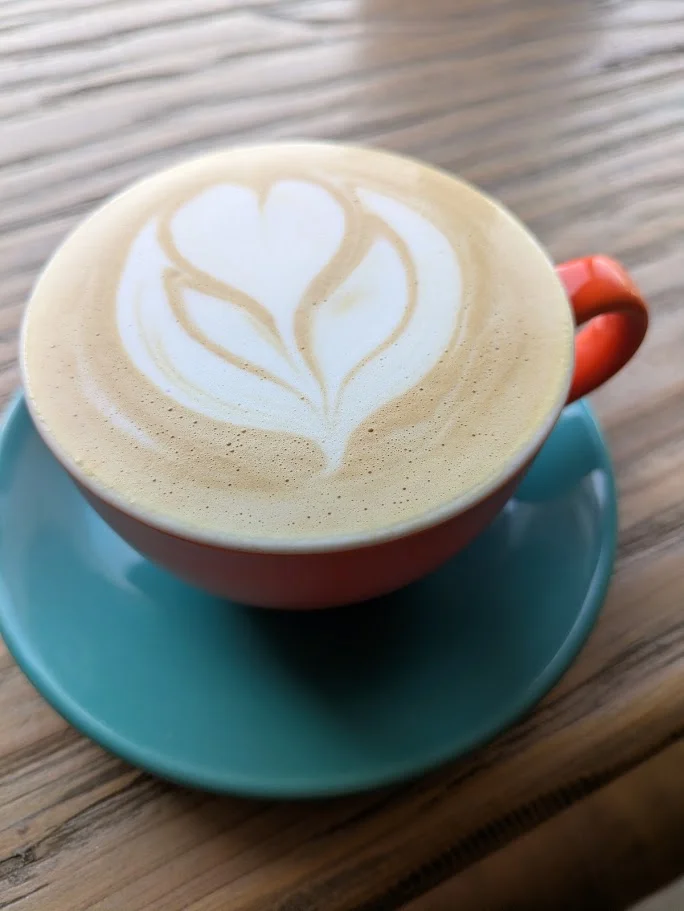
Bluebird Coffee Roastery in Howick, KwaZulu-Natal, was named Roastery of the Year at the 2025 Coffee Magazine Awards.
We chose Bluebird because its approach matches ours: carefully sourced coffee, thoughtful roasting and no shortcuts between the bean and the cup.
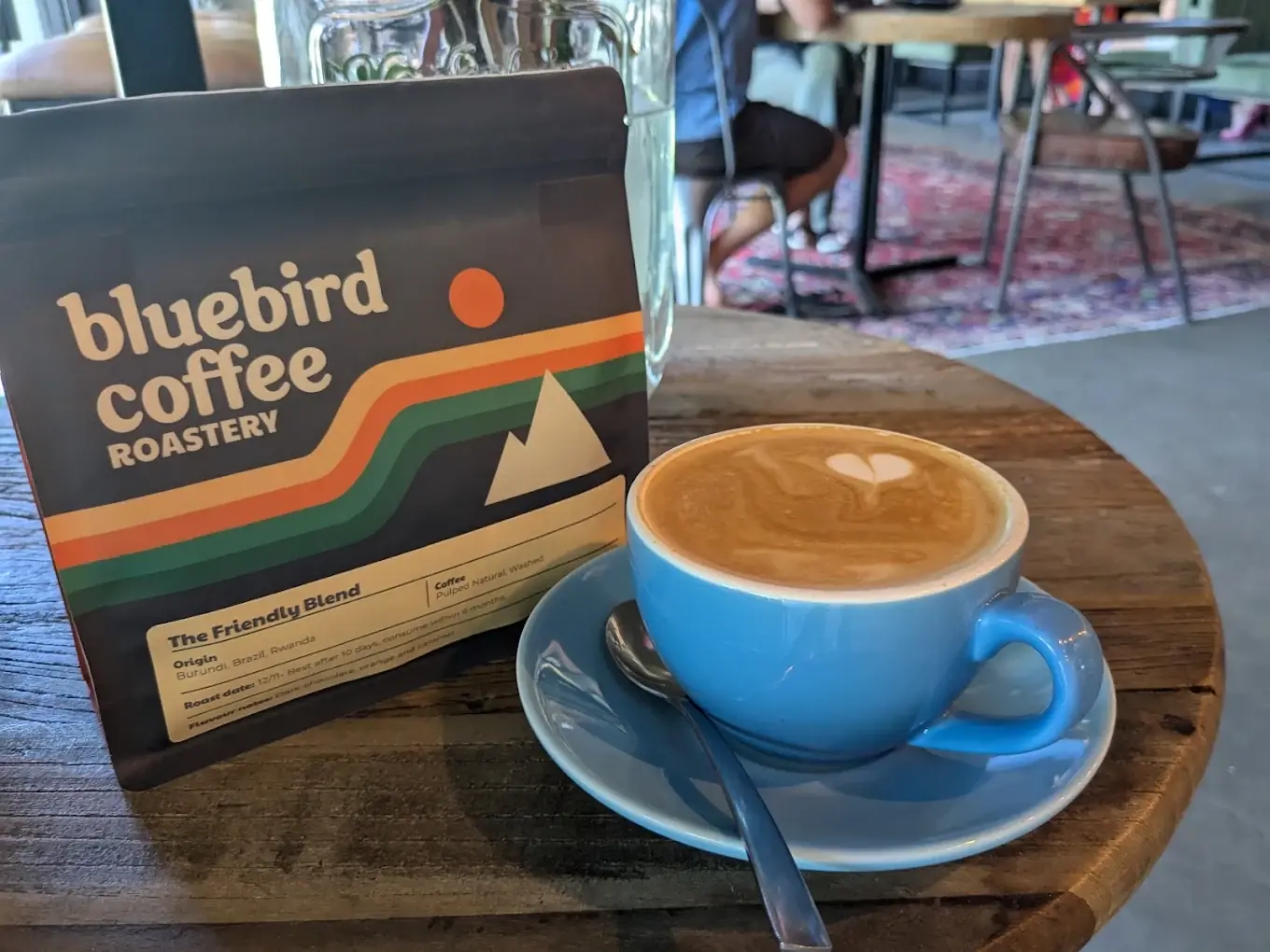
Meet Friendly Blend.
Bluebird’s medium-roast espresso blend, built to taste great in milk drinks and designed for sweetness rather than bitterness.
Right now it combines coffees from Brazil, Burundi and Rwanda. Bluebird adjusts the mix as harvests change, while keeping the blend’s familiar balance. Ask your barista what’s in today’s bag.
The medium roast keeps more of the coffee’s own character while developing enough caramel sweetness and body for a satisfying espresso, cappuccino or flat white.
Roast changes what you taste.
Roast level describes how far the beans are roasted. It doesn’t mean weak or strong, and it doesn’t tell you how much caffeine is in your cup.
Light roast
More of the bean’s origin character: floral, fruity, citrusy or tea-like, often brighter.
Medium roast · ours
Origin flavours balanced with roast sweetness. A rounded cup where fruit sits alongside caramel, nuts or chocolate.
Dark roast
The roast takes the lead: smoky, spicy, bittersweet or dark-chocolate notes, with less fruit.
Three origins. One balanced cup.
Brazil
Body, sweetness and familiar nut, cocoa or caramel notes: the anchor of an espresso blend.
Burundi
Lively red fruit, citrus, floral or tea-like notes, with a clean sweetness.
Rwanda
Prized for clarity and sweetness, with red fruit, citrus, floral or caramel notes.
Espresso follows a recipe.
Good espresso is repeatable because it is measured. Our baristas control five things, then taste the result.
- Dose: how much ground coffee goes into the basket.
- Yield: how much espresso comes out.
- Time: how long the water takes to pass through the coffee.
- Grind: how fine or coarse the coffee is, which controls the flow.
- Temperature: the heat of the brewing water.
Dialled in every day.
Coffee changes as it ages, and temperature and humidity change how beans and grinders behave. So our baristas check the espresso at the start of every day and keep checking through service.
Too fast? The shot tastes thin or sour, so we grind finer.
Too slow? The shot tastes harsh or bitter, so we grind coarser.
Just right: sweetness, acidity and bitterness in balance, with the blend’s character shining through.
What is a V60?
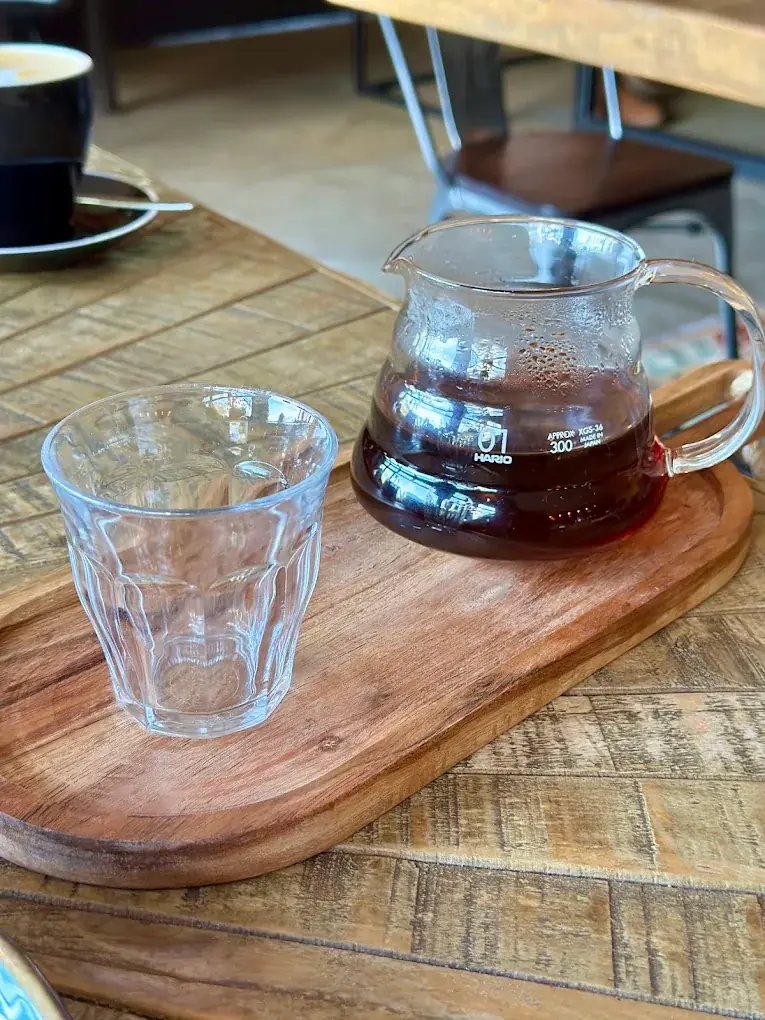
A cone-shaped pour-over brewer made by Hario. Hot water is poured by hand over freshly ground coffee in a paper filter.
Compared with espresso, a V60 gives a longer, lighter cup where delicate aromas and origin flavours are easier to taste. We brew a rotating choice of Bluebird coffees this way, one cup at a time.
We’re currently the only place in Knysna serving V60.
Take our coffee home.
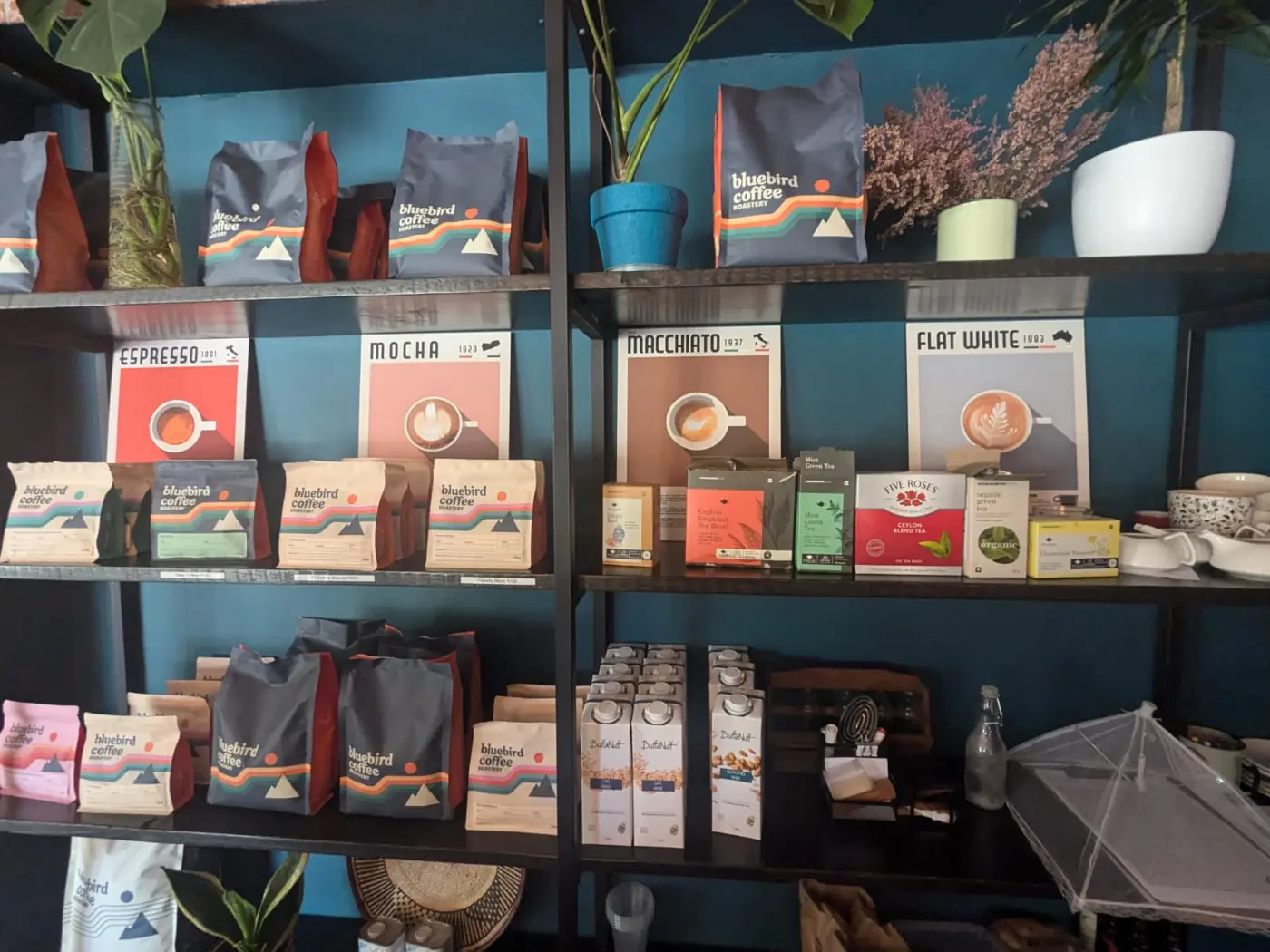
We have a variety of Bluebird coffees available to buy, including Friendly Blend, our house espresso blend.
We sell whole beans only, so nothing is sitting around pre-ground. No grinder at home? No problem: we’ll grind your beans for you, fresh, to suit the way you brew.
Ask at the counter and we’ll help you choose the right one.
Does good coffee need sugar?
Sugar is personal, and there’s no wrong way to enjoy your coffee.
But a well-roasted, well-made coffee should taste balanced on its own. If coffee is so bitter that sugar feels necessary, the beans, roast or extraction may be hiding its natural sweetness. Try ours without, then decide.
How well do you know coffee?
Ten questions about extraction, grind, espresso and filter brewing. Every answer comes with an explanation.